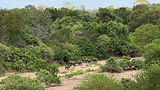
Wild dog safari
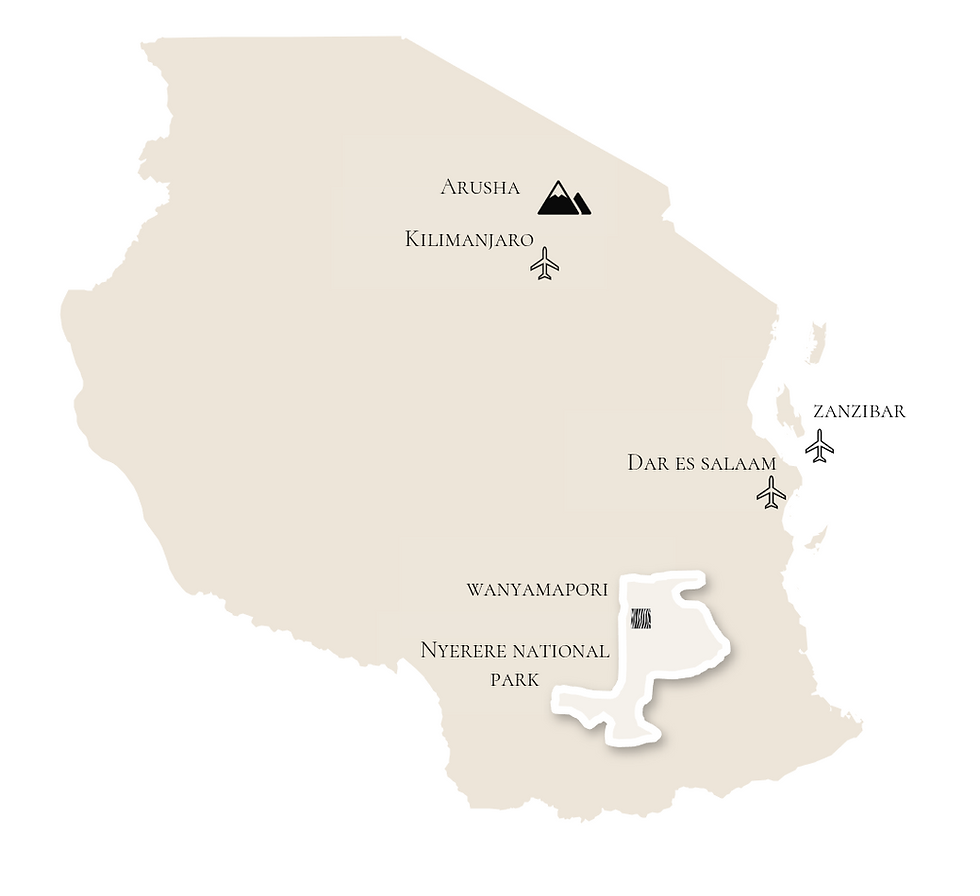
Why Nyerere National Park?
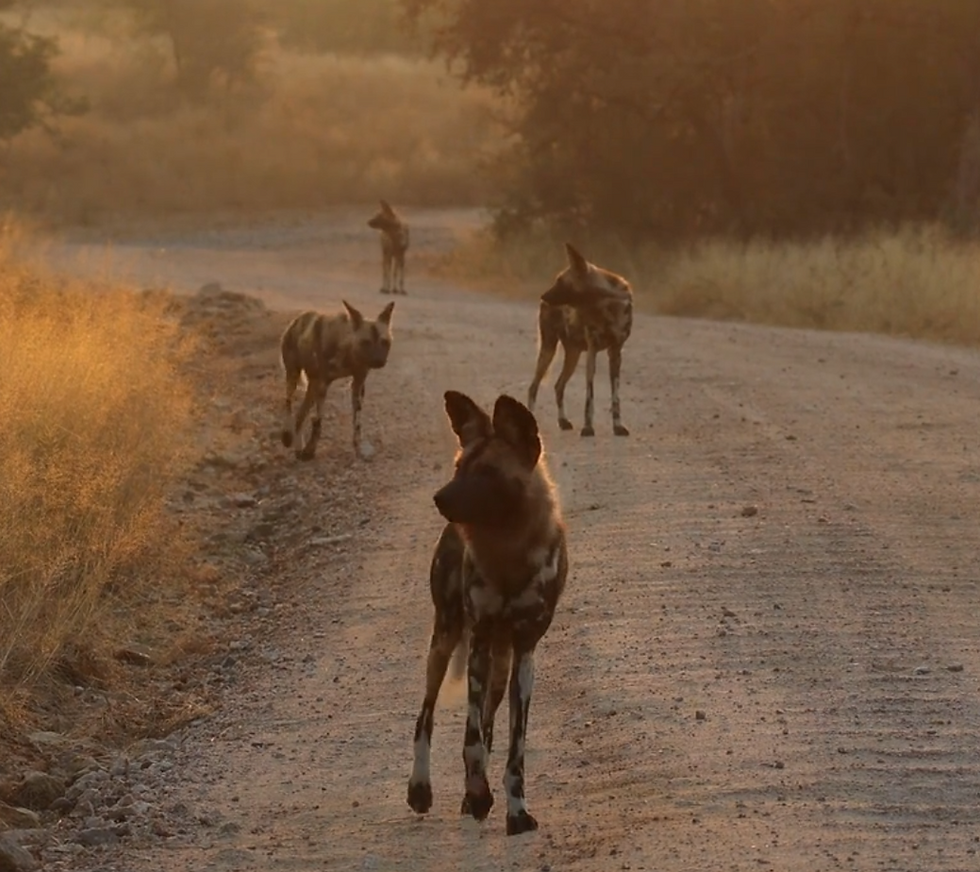
Nyerere is the best place in the world to see African wild dogs
There are roughly 6,600 African wild dogs left in the wild, scattered in fragmented populations across the continent. Nyerere National Park alone is estimated to hold 800 to 1,300 of them — somewhere around 15 % of the entire global population, in a single protected area. There is no other park on earth where the odds of finding a pack are this good.
The reason is simple: wild dogs need space, and Nyerere has it. At over 30,000 square kilometres, this is Tanzania's largest national park, and the wider Selous ecosystem extends well beyond its borders. Wild dogs range across enormous home territories — a single pack can cover 500 to 1,500 square kilometres. In smaller parks, packs collide with park boundaries, roads and human pressure. In Nyerere, they don't.
The habitat itself is exactly what they're built for. The Rufiji River and its lakes provide year-round water; miombo woodland and palm savannah offer cover for hunting; open floodplains let them run down impala and reedbuck on those famously coordinated chases. And because the park is lightly visited compared to Tanzania's northern circuit, you're far more likely to find a pack on your own — without a queue of vehicles already at the sighting.
If you want to go deeper into the science, the ecology and what makes this population so special, we've written a full guide on African wild dogs in Nyerere National Park. For everyone else: the short version is that this is the trip you take if seeing wild dogs is the reason you're going to Africa at all.
Population and global significance

Africa's largest wild dog stronghold — ~800–1,300 dogs, around 15 % of the global population
The species has lost more than 90 % of its historic range across Africa
Listed as Endangered on the IUCN Red List
Nyerere is one of only four or five remaining strongholds worldwide
Range and territory
A single pack at Nyerere ranges over 500–1,500 km² — among the largest territories of any African predator
Packs cover 20–50 km a day while hunting
Nyerere's size (>30,000 km²) means packs can move freely without hitting park boundaries — a rarity
Genetic isolation in fragmented populations is a long-term concern; Nyerere's connectivity makes it especially valuable
The famous Matambwe pack is directly located in our area at beho beho river
Key take aways for the African Wild dog
Hunting and behaviour
Hunting success rate of 60–80 % — the highest of any African predator (lions sit at 25–30 %)
Cooperative chasers — they don't ambush, they exhaust prey over distances of 2–5 km
Primarily diurnal, hunting at dawn and dusk and resting through midday heat
Main prey at Nyerere: impala, reedbuck, and young wildebeest; they'll also tackle warthog and small antelope
They share kills peacefully — even with pups eating first, contrary to most predators
Why Nyerere specifically works for them
The combination of river, miombo woodland, and open savannah matches their habitat needs perfectly
The combination of river, miombo woodland, and open savannah matches their habitat needs perfectly
Low tourism pressure compared to the northern circuit — packs aren't habituated to convoys of vehicles, but they also aren't disturbed off normal behaviour
Resident TANAPA and researcher monitoring means known pack territories that experienced guides can target
Classic Wild dog Safari at Nyerere National Park


Stay at the magnificant Porinini Camp
Located along the sandy banks of the Beho Beho River, deep in the heart of Nyerere National Park, Porini Camp offers an authentic safari experience rooted in the traditions of early exploration.
Designed as a classic safari camp, Porini blends the raw adventure of a fly camp with the comfort of a tented expedition camp
Rates and Seasonality
-
Rates include game drives and full-board accommodation, including soft drinks, beer, and house wine.
-
Special offers may apply.
-
Please contact us for the best available rates.
-
Rates are subject to change and were correct at the time of publication.
-
TANAPA park fees and selected activities are not included and will be charged separately.
Low Season
470 USD per person per night
01.06.2026 - 30.06.2026
High Season
650 USD per person per night
01.07.2026 - 31.01.2027
Holiday Season
750 USD per person per night
23.12.2026 - 02.01.2027
470 USD per person per night
01.02.2027 - 15.03.2027
Low Season
Track Africa's rarest large predator in the heart of their biggest remaining stronghold — on foot, by boat, and on game drives. Then unwind under canvas at Wanyamapori Porini Camp, where every detail is taken care of.
Visit the
Track Africa's rarest large predator in the heart of their biggest remaining stronghold — on foot, by boat, and on game drives. Then unwind under canvas at Wanyamapori Porini Camp, where every detail is taken care of.
Visit the Porini Camp

What our clients say
Porini Camp went far beyond what we expected. The team thought of every detail and made us feel completely at home from the moment we landed. The real highlight, though, was Augustin. At 4:30 in the morning — when honestly we'd have happily slept another hour — he gently persuaded us to head out one more time, promising the bush would reward us. He was right. We sat in silence for forty minutes as a pack of wild dogs greeted each other in the half-light, fifteen of them, completely oblivious to us. Without his quiet insistence we would have missed the moment we'll remember for the rest of our lives. Thank you, Augustin, and thank you to the whole team.
Sarah & Michael, Germany
Porini Camp will always hold a special place in my heart – it is where my partner proposed to me, with the magnificent view over the Beho Beho River as our backdrop. As the sun set in shades of gold and rose, with elephants in the distance and the soft sound of the river below, he went down on one knee. I will never forget that moment
Monika,
Austria